Seeing
Paint is seen
by the light on it.
A painter spends as long looking as painting: at the ridge a stroke left, at whether a passage is still wet, at the drawing with fresh eyes. I wanted to show the paint the way a room shows it, by light that comes from somewhere and changes as you move, and to make sure nothing stands between you and what you need to see.
Depth is about a fifth geometry and four fifths light.
A perfect relief under a fixed light looks like embossed plastic. A modest one with the right surface, under a light that moves as you move, looks like paint. So I put less effort into how tall the paint stands and more into how light falls on it.
What a painter needs to see
- The reliefA ridge only shows when light rakes across it. Head-on light flattens any painting.
- Wet from dryFresh oil shines; dry paint sinks and goes matte. Painters read wetness by the gloss.
- Through a glazeOil has a second depth: light passing through a thin glaze, off the ground and back out.
- The drawing, freshThe eye gets used to a painting's mistakes. Painters flip it, or look at it in a mirror.
- The mark as it is madeA brush's tip is visible as it moves. A finger's is not.
What I decided
A light that comes from somewhere, and moves as you move
The paint has height, and I light it with a single lamp, never evenly. Tilt the phone and the painting turns between the lamp and your eye, so light rakes across the ridges and the highlights and shadows move, the way they do when you turn a canvas to a window. If you want a light that stays put, Studio lets you place the lamp by hand.
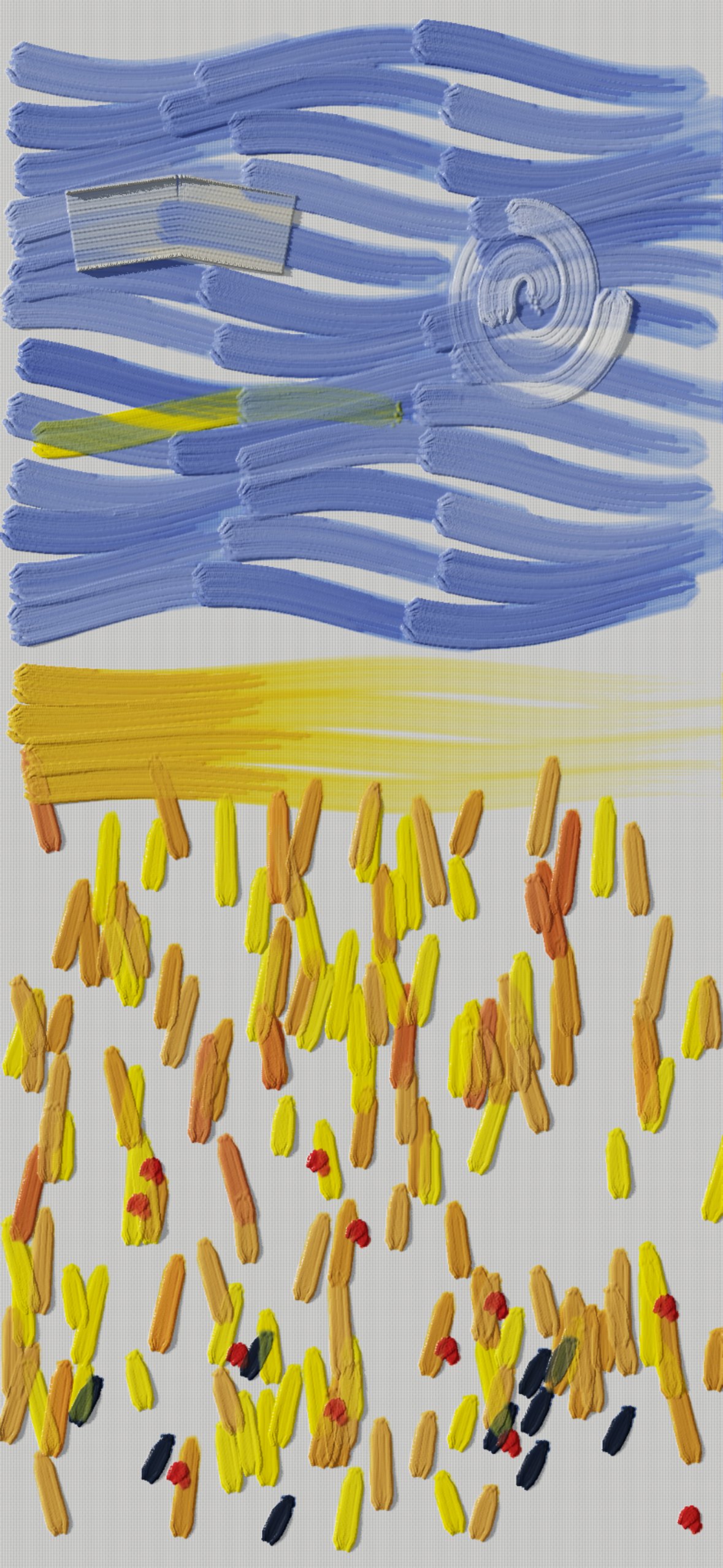
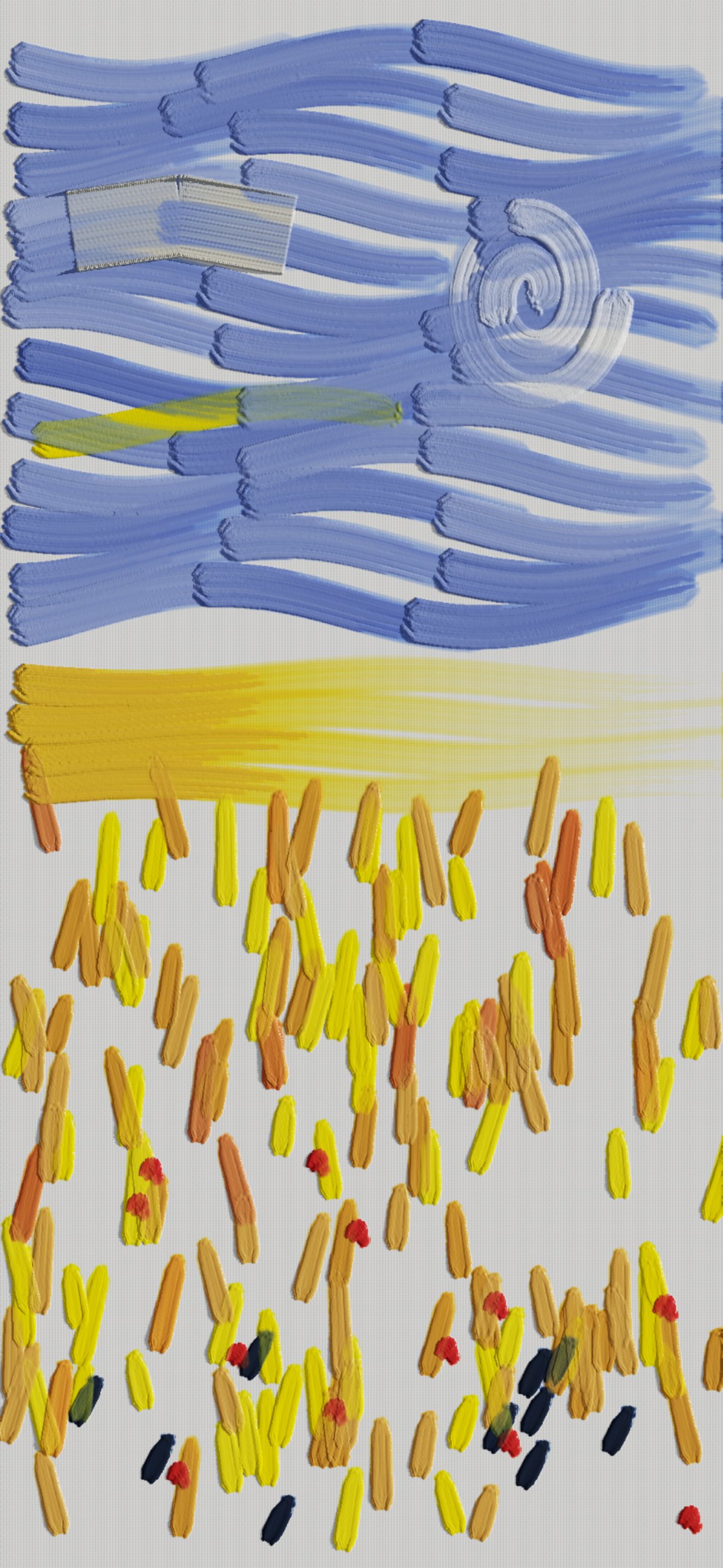
The same paint, the lamp moved from left to right. Nothing was repainted.
Gloss that follows wetness, grooves that follow the brush
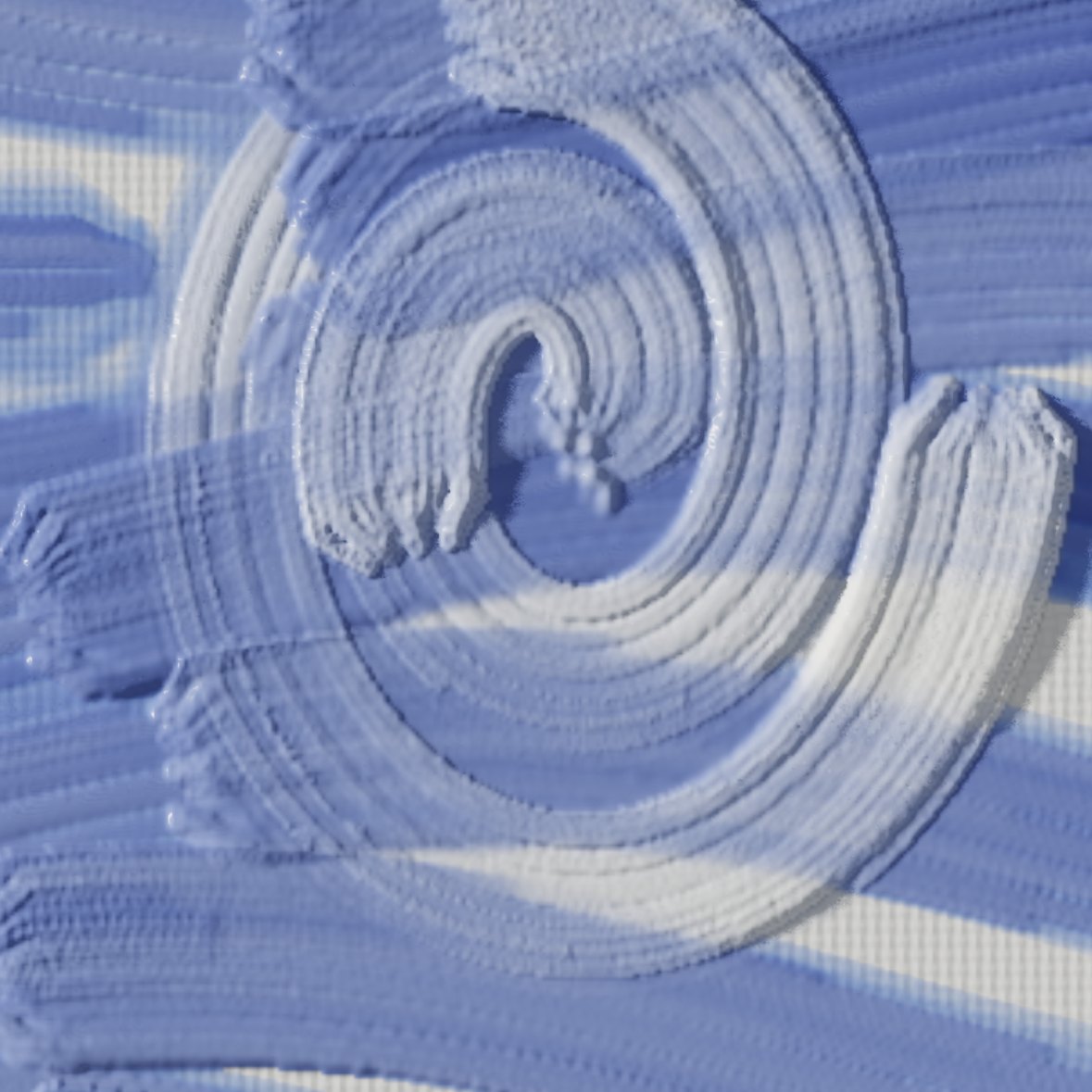
Wet, oily paint shines and dry paint sinks, so you can see what's still workable. A knife-laid plane shines more than brushwork. The bristles leave fine grooves along each stroke, so the highlight stretches across it the way it does on real brushwork, and every ridge casts a soft shadow away from the lamp. A thin passage lets the canvas's weave show; a heavy one buries it.
Light through the paint, not only off it
Colour is worked out as light passing through films of pigment over the ground, not as a flat colour painted on top. So a thin layer over a light ground glows, white covers a toned ground while ultramarine lets it through, and a glaze over dried paint deepens what is under it instead of hiding it.
Making light cheap enough to move freely
Lighting every pixel from scratch cost about 830 milliseconds a frame in my test renderer: far too slow to tilt. So I split the work. Where paint changes, and only there, its colour and surface are worked out once and kept; every frame only lights them. A full redraw fell to about 160 milliseconds, and moving the light never touches the pigment arithmetic. It's an engineering decision I made for a seeing one.
Seeing the painting fresh
Mirror flips the painting on screen, the way I'd flip a canvas or look at it in a mirror to catch what my eye has stopped noticing. You can keep painting while it is flipped: the paint still lands under your finger, and a saved image is always the right way round.
Nothing in the way of the paint
The paint lands just above your fingertip, where you can see it, and a small ring shows the spot before any paint goes down. The eyedropper shows the colour under your finger in a loupe beside it. The corner controls fade while a stroke is down. I made every one of these so you can see the mark being made.
The hand: how the paint came to land where you can see it.
Showing it outside the app
A saved image is a single photograph of the paint under one light. Sharing the painting as something your viewer can relight by tilting their own phone was part of my original idea, and I haven't built it yet.
What makes the painting feel 3D What the masters achieved with the material